Five years ago, a big GPU cluster made you a serious research lab or a well-funded startup. Now it makes you a line item in somebody's national security briefing. Governments have finally understood something the industry has known for a while: the ability to train and run large models at scale is not just an IT decision. It is industrial policy, military capability, information control, and energy planning rolled into one. Your "infra" is their strategic asset or their strategic liability, depending on where you sit. ## FROM "MORE SERVERS" TO "NATIONAL CAPABILITY" For a long time, compute looked like plumbing. More cores, more RAM, more racks. Important, but boring. Large-scale AI changed the scale and concentration: You need dense clusters of accelerators, not just generic CPUs.
Those clusters draw tens or hundreds of megawatts.
They sit on top of sensitive datasets on the open web and power models that can do useful and harmful things at once. At that size, governments stop seeing datacenters as generic real estate and start seeing them the way they see ports, refineries, or major telecoms: nodes that can shift economic power and, in the wrong hands, cause trouble. So they start asking questions. Who owns this capacity.
Who can rent it.
Where it sits physically.
What models it enables.
How much of the grid it consumes. That bundle of questions is what "national compute policy" really is. ## ECONOMIC COMPETITIVENESS: PRODUCTIVITY) RUNS ON FLOPS First lens: growth. AI is one of the few plausible ways advanced economies can get meaningful productivity gains out of aging populations and saturated service sectors. Governments have bought the story that: Better models mean better copilots, better analytics, better automation.
Better models require large-scale training training models without centralizing data runs and cheap inference.
Large-scale training and inference require big clusters and stable power. If that is true, then countries without access to advanced accelerators and dense datacenters will be stuck licensing capability from those that do. That looks like a future of permanent dependence. That is why you see: Subsidies for chip fabs and packaging plants.
Tax breaks and incentives for AI-focused datacenters.
Public grants and shared "national compute" programs for universities and startups. Your cluster is no longer "your" cluster in the eyes of policymakers. It is part of the national stock of productive capacity, a bit like the country's fleet of container ships or high-speed rail lines. ## SECURITY AND INTELLIGENCE: DUAL USE ALL THE WAY DOWN Second lens: hard security. Advanced models are dual-use by default. The same systems)-reliability engineering that: Write code and help patch vulnerabilities can generate exploits.
Translate and summarize can scale disinformation.
Do image analysis and pattern recognition can run surveillance.
Plan logistics can plan military operations. Governments that worry about adversaries do not just think about who has which missiles. They think about who has the compute to build and run models that plug into everything from cyber operations to autonomous systems. That is why export controls suddenly care about TOPS, HBM bandwidth, interconnects, and cluster size. Restricting access to high-end accelerators and the ability to wire them together is a way to slow or shape an adversary's AI progress without firing a shot. If your cluster is big enough, or belongs to a company in a sensitive sector, expect attention from: Defense ministries and intelligence agencies.
Foreign investment review boards.
Trade and export control authorities. You may think you are training recommendation models and copilots. From their point of view, you are also operating infrastructure that could, in principle, accelerate weapons research or offensive cyber tools. ## SOVEREIGNTY AND CONTROL: WHOSE RULES APPLY INSIDE system-training run curriculum design data mixtures emergent behavior YOUR RACKS Third lens: sovereignty. Data localization debates were the first round. Countries argued about where user data could be stored and under which courts it fell. Compute is the second round: where and under whose legal jurisdiction are the models that act on that data. Governments worry about scenarios like: Critical infrastructure operators depending on foreign clouds that can cut them off.
Domestic companies sending sensitive workloads to models hosted abroad.
Foreign entities operating large clusters domestically with little visibility into what they run. In response, you see: Localization requirements that effectively force certain workloads to run on domestic or regionally bounded compute.
Restrictions on foreign ownership or control of critical datacenters.
Pushes for "sovereign AI" stacks: local models running on local hardware, at least for some sectors. If you are running a significant cluster inside a country, regulators will want to know: Which sectors use it.
Which foreign entities have access.
How easily workloads and data could be migrated in or out under stress. They do not want to discover in a crisis that an important part of their digital infrastructure answers to someone else. ## POWER, CLIMATE, AND THE GRID Then there is the physical side. A serious AI datacenter is a power project with some computers attached. It can consume as much electricity as a mid-size town. It needs water or alternative cooling. It competes with other industrial loads and households for capacity. Energy and environment agencies now have to factor AI build-out into: Grid expansion plans.
Renewable deployment and balancing.
Emissions trajectories and climate commitments. From their perspective, your new site is not only "Compute Region X." It is: A load ai tools that help people think that will run close to 24/7.
A driver of local emissions if power is not clean.
A factor in whether the next industrial facility can get connected at all. That is why permitting for new clusters is getting slower and more political. It is also why some governments will explicitly steer AI workloads toward regions where they have surplus power, or toward specific types of generation. ## THE TOOLBOX OF NATIONAL COMPUTE POLICY Put all of this together and you get a growing toolbox. Controls on what accelerators can be exported where, and in what configurations.
Investment screening for large foreign-owned clusters or acquisitions in sensitive sectors.
Subsidies and tax regimes for locating compute in specific regions or under certain conditions.
Sovereign or public–private compute programs that give domestic researchers and companies access to clusters they could not afford alone.
Rules tying sensitive workloads to in-country or in-region compute, sometimes with specific vendor requirements.
Grid and climate policies that effectively set a ceiling on how fast and where you can build. Your cluster is being shaped by decisions far upstream of your contracts with a cloud or colo provider. ## WHAT THIS MEANS IF YOU ARE BUILDING domain specific-assistants-for-law-finance and medicine ON TOP You cannot control the geopolitics. You can control how exposed you are. If you are training frontier-scale models or running huge commercial APIs, you are part of the conversation whether you like it or not. Expect government interest in: Your hardware sourcing and topology.
Your major customers and sectors.
Your incident and security posture.
Your contingency plans if access to foreign compute is disrupted. If you are "just" a product company building on top of clouds and hosted models, the impact is more indirect but still real: Availability of certain model families or instance types may vary by region because of export or localization rules.
Pricing and quotas can swing when policy changes upstream change supply.
You may be forced to segment your stack by geography: different providers, models, or deployment patterns for different markets. Multi-region and multi-provider strategies stop being pure cost optimization and start being basic resilience against regulatory and supply shocks. ## THE POLITICS INSIDE YOUR ARCHITECTURE None of this means you should turn every engineering decision into a foreign policy seminar. It does mean that a few previously "purely technical" questions are now political in effect: Do you build on a single hyperscaler, or several.
Do you rely on a single frontier model vendor, or assume you will need to swap.
Do you design for clean separation between regions, or assume one global fabric.
Do you plan for sudden loss of a particular accelerator class in one market. These are not hypothetical risks anymore. They are the quiet context behind RFPs, procurement decisions, and strategic partnerships. From your vantage point, a GPU cluster is infrastructure. From a government's vantage point, it is leverage, dependence, risk, and opportunity, all wired into a few rows of racks. National compute policy is the name for how they decide to use that leverage. Whether you plan for it or not, it will shape what you can build, where, and for whom.
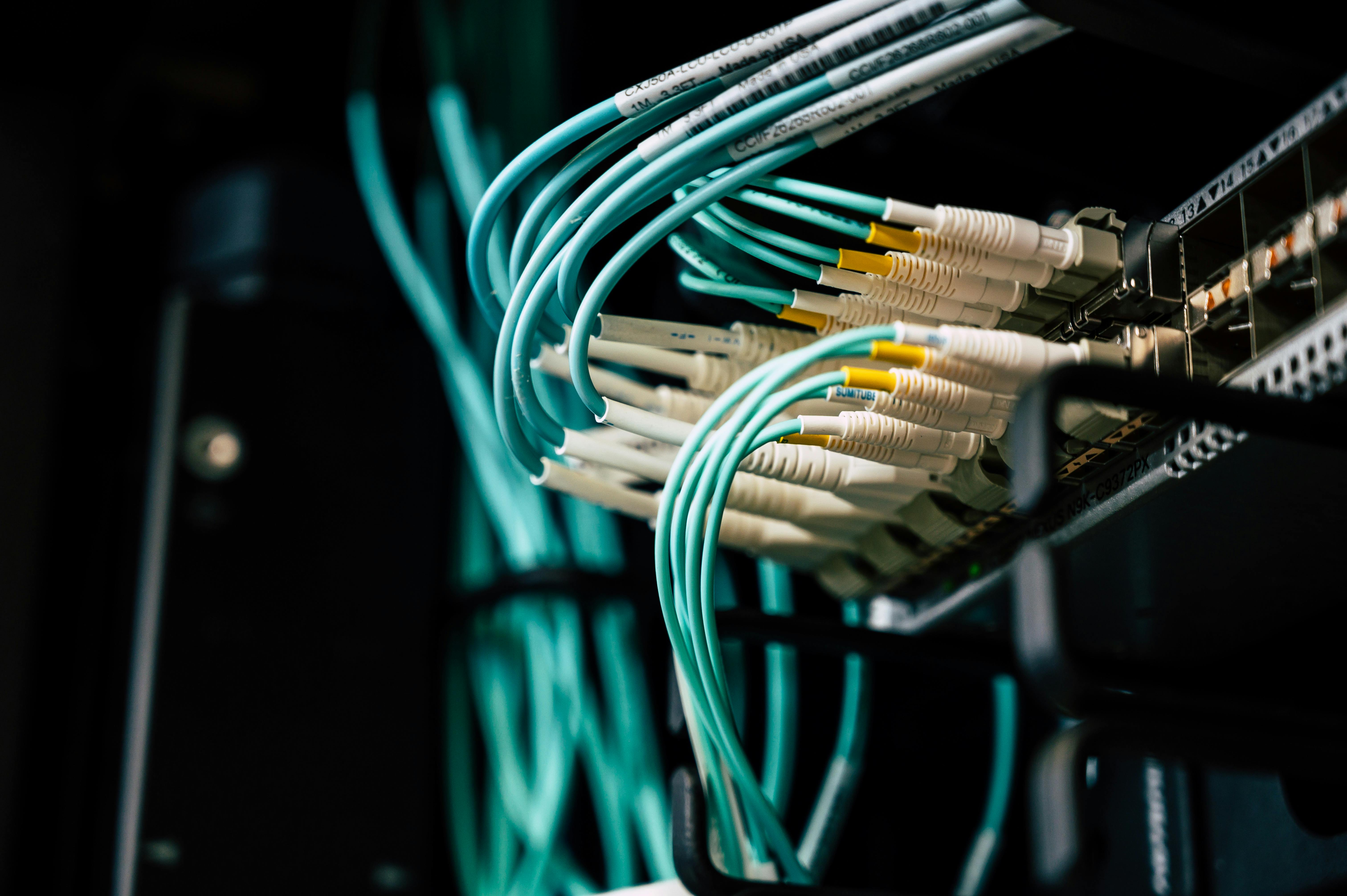
National Compute Policy: Why Governments Care About Your GPU Cluster
Master AI with Top-Rated Courses
Compare the best AI courses and accelerate your learning journey
Keywords
This should also interest you

Algorithmic Labor: Data Labeling, Reinforcement Learning, and the People Behind the Models
Most diagrams of AI pipelines jump straight from "data" to "model" as if the gap were filled by math alone. In reality, a large part of that gap is filled by people working through queues of tasks: tagging images, rewriting sentences, rating outputs, flagging harm. The current wave of foundation models did not remove human labor—it reorganized it, offloaded it, and hid it.
The New AI Governance Stack: Policies, Audits, and Technical Guardrails
A lot of companies think they have AI governance because they wrote a principles document and formed a committee. That is not a stack. Once you start deploying models into workflows that touch real customers, employees, or regulated data, governance becomes a set of systems: policies wired into code, logs you can query, audits that actually bite, guardrails that fail closed.

Regulation Is Now a Feature: Building Products Under Emerging AI Rules
For years, tech teams treated regulation as a late-stage obstacle. You ship, you find traction, then someone forwards a PDF from legal and you bolt on whatever is needed to pass procurement. With AI, that sequence breaks.