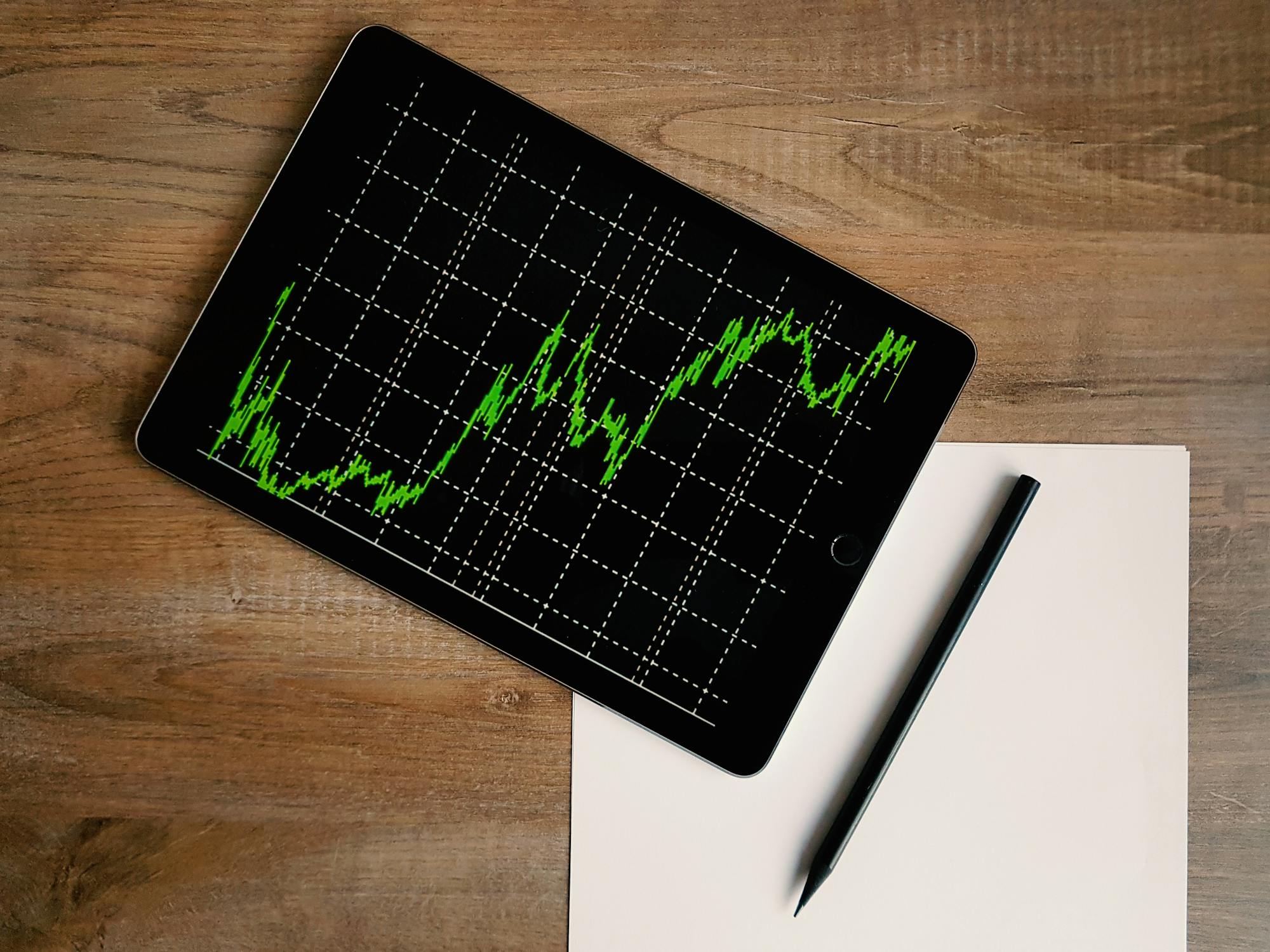
AI in Financial Markets: From Trading Algorithms to Systemic Risk AI has been embedded in financial markets for decades, but recent advances in machine learning system-training run curriculum design data mixtures emergent behavior models without-centralizing-data are transforming trading strategies, risk management, and market structure itself—with implications that extend far beyond individual firms. ## The Evolution of Algorithmic Trading Algorithmic trading isn't new. Simple rule-based systems)-reliability engineering have existed since the 1980s. But modern AI-driven trading is qualitatively different: Traditional algos: Execute pre-defined strategies based on explicit rules ML-driven trading: Learn patterns from data, adapt strategies, discover relationships humans might miss This shift from programmed logic to learned behavior changes how markets function. ## High-Frequency Trading At the shortest timescales, AI algorithms compete in a realm measured in microseconds. These high-frequency trading (HFT) systems:
- Process market data faster than humans can perceive
- Execute thousands of trades per second
- Profit from tiny price discrepancies
- Provide liquidity but can also destabilize markets The arms race in HFT has driven massive infrastructure investment: colocating servers next to exchanges, using custom hardware, optimizing every nanosecond of latency. ## Predictive Models At longer timescales, ML models attempt to predict price movements based on:
- Historical price patterns
- News and social media media pipelines from text prompt to production asset sentiment
- Macroeconomic indicators
- Order book dynamics
- Corporate fundamentals These models don't need to predict perfectly—even a slight edge privacy-and-latency can be profitable with sufficient trading volume. ## The Alpha Decay Problem As more firms adopt similar AI techniques, profitable patterns get arbitraged away. This "alpha decay" means strategies that once worked stop working as they become crowded. This creates a continuous arms race: find new patterns, extract profit until others discover them, move on to the next opportunity. Firms invest heavily in finding novel data sources and techniques. ## Alternative Data The search for trading edge has led to creative data sources:
- Satellite imagery of parking lots (retail foot traffic)
- Credit card transaction data (consumer spending)
- Job postings (corporate expansion plans)
- Web scraping (pricing, inventory)
- Social media sentiment This raises questions about information asymmetry and fairness. Should professional investors have access to data that retail investors don't? ## Risk Management AI is also transforming risk management:
- Portfolio optimization: Constructing portfolios that balance return and risk
- Stress testing: Simulating portfolio performance under extreme scenarios
- Anomaly detection: Identifying unusual patterns that might indicate problems
- Fraud detection: Catching suspicious transactions These applications can make the financial system more stable—or create new types of risks if the models fail. ## Systemic Risk The concerning question is what happens when many AI systems interact in markets: Flash crashes: Algorithms can trigger rapid market moves as they react to each other. The 2010 Flash Crash is an example. Correlation cascades: If many algorithms use similar models and data, they may all try to execute similar trades simultaneously, overwhelming market capacity. Emergent behavior: Complex interactions between algorithms can produce market dynamics no individual algorithm was designed to create. This relates to Retrieval-Augmented Generation Done Right. Opacity: It's hard to understand why markets moved when the cause is the interaction of thousands of black-box algorithms. More on this subject in our analysis in What Is Artificial Intelligence? A Simple Explanation With Real-Life Examples. ## Regulatory Challenges Regulators struggle to oversee AI-driven trading: Speed: Markets can crash and recover in seconds, before human rlhf constitutional methods alignment tricks regulators can respond. Complexity: Understanding what algorithms are doing requires technical expertise that regulators may lack. Innovation pace: By the time regulations are written, the technology has evolved. Attribution: When something goes wrong, who's responsible? The firm that deployed the algorithm? The data scientists who built it? The algorithm itself? ## Market Microstructure AI is changing the fundamental structure of markets: Price discovery: How do markets find efficient prices when much trading is driven by algorithms that don't have fundamental views? Liquidity: HFT provides liquidity under normal conditions but may withdraw during stress, exactly when it's most needed. Information: What does price mean when it reflects algorithmic positioning rather than human judgment about value? ## The Retail Investor What does AI-driven trading mean for individual investors? On one hand, algorithmic market making has reduced trading costs and improved execution. On the other hand, retail investors can't compete with sophisticated AI systems that process information faster and more completely. This has driven growth in passive investing—if you can't beat the algorithms, track the index. ## Future Developments Looking ahead, several trends seem likely: Reinforcement learning: Algorithms that learn optimal strategies through trial and error Multi-agent modeling: Explicitly modeling the behavior of other market participants Interpretability: Pressure for more explainable trading algorithms Regulation ai-products: More oversight of algorithmic trading, possibly including "circuit breakers" for AI systems ## Ethical Considerations AI in finance raises ethical questions:
- Does algorithmic trading serve a social purpose beyond private profit?
- How do we ensure markets remain fair and accessible?
- What happens to employment in finance as AI automates analysis and trading?
- Should there be limits on what AI systems can do in markets? ## Implications Financial markets are where AI interacts with some of society's most important systems: how capital is allocated, how companies are valued, how risk is managed. Getting this right matters for economic stability and efficiency. Getting it wrong could trigger market disruptions or deepen inequality. Understanding AI in financial markets isn't just about technology—it's about how we want our economic systems to function.